
2026 Glass Industry Forecast

Australia’s Glass industry took a big hit last year with Oceania Glass going into voluntary administration. Since then, a scramble to secure sheet supply has swept across the nation, with imported panels no longer an option.
As a result, supply chains, storage, and factory space have all had to be reconsidered, along with the entire production process. For many, that has opened up new considerations and windows of opportunity; each driven by three major factors.
.
Automation and digitsation
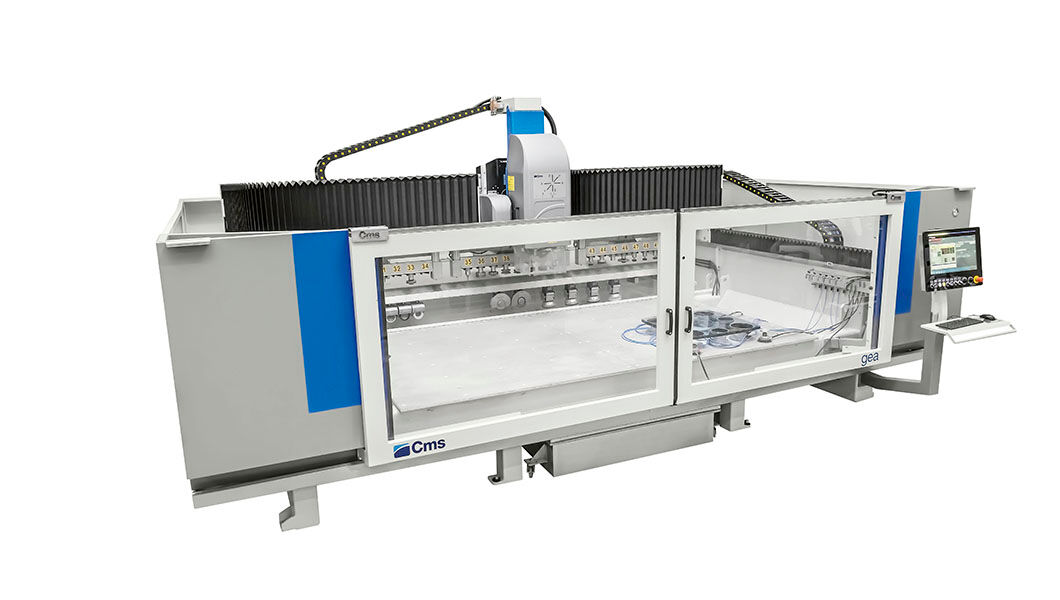
CMS Gea
For the Glass industry, high-volumes and short cycles are its bread and butter. Until recently, optimising the production process was more about the hardware in CNC machines, rather than the software – and now, the focus has flipped 180 degrees.
Sophisticated sensors are feeding data to the machines, which in turn, lead to further optimisation. Software engineers like Elton Lockhart from Civic Shower Screens, then use this information to streamline the production process, find where it can be made more efficient, and identify areas where machinery updates would make the most difference.
Sometimes, that means implementing new software programs. At other times, it means upgrading the existing machine that’s already in the shop (in Elton’s case, the CMS Gea). The beauty of automating is that it brings insights, which are key in this time of rapid change.
Design Direction
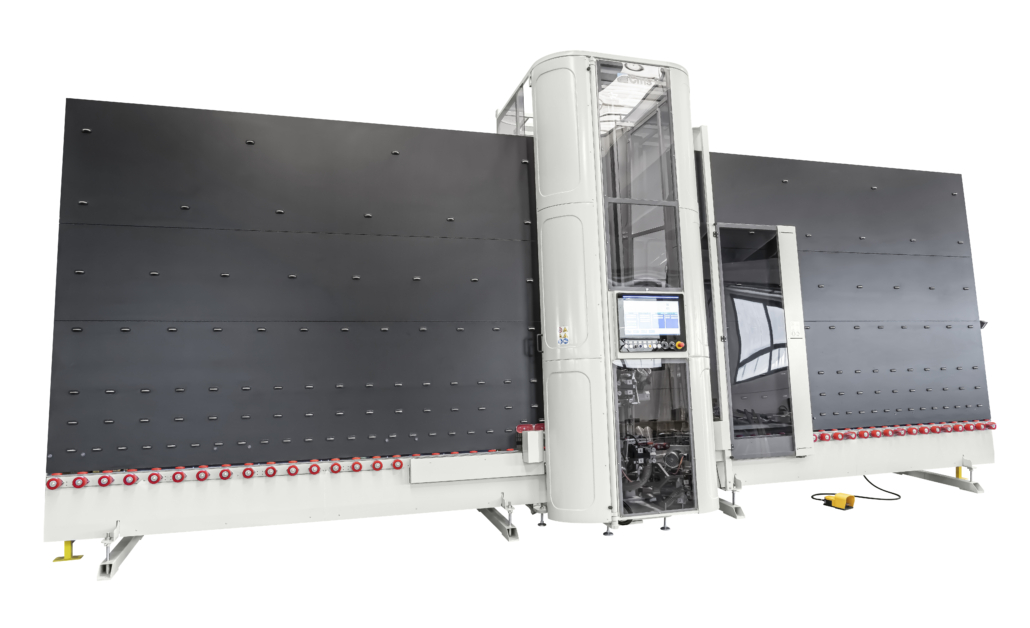
CMS Aura
Since the release of the new Building Code, the emphasis in glass manufacturing has been on low-energy, double-glazed products. Investments in double-glazing and automated lines like those from Bovone have risen significantly, with many also exploring robots for repetitive detail work.
Machines like the CMS Aura, used for dry seaming, also hold appeal. With designers looking to create low-carbon, low-energy solutions, the Aura’s water-free functions are ideal for streamlining project lifecycles; making the overall design more sustainable. From a manufacturer’s perspective, the preference holds direct benefits by lowering overheads, while efficiently producing quality results.
Strategic Inventory Management
With imported panels now the only option for Australian manufacturers, operations have been majorly disrupted. Now, strategic inventory management has become a must, and those who set solid strategies in place have the competitive advantage.
For most glasscutters, that means holding more stock on-site. Some have had to look for bigger floor plans to house the stock, while other have the room but lack proper storage for the increased number of panels. The right strategies make all the difference – and it’s well worth looking at the overall process before you make any big moves this year.
The Forecast

While change is rocking Australia’s Glass industry, those who move ahead despite it will reap major rewards. The key is to look at factors that will grow in importance, and those that won’t; then craft a winning strategy.
The three factors outlined above are already being felt, and will have even greater effects on glasscutters this year. With prefrabricated homes on the rise, along with energy-efficient design demands, carving your way into a niche is a good idea – and the better equipped you are for production demands, the more work will come your way.
Sometimes, all it takes is a fresh set of eyes to spot areas for optimisation within your process. We’ve seen the difference this makes first-hand, and are happy to lend you ours.
Related Articles
 https://www.innovync.com.au/wp-content/uploads/2026/02/curved-stonework.jpg
920
736
Nicole Sherwin
https://www.innovync.com.au/wp-content/uploads/2022/07/Innovync-logo.png
Nicole Sherwin2026-02-23 16:49:352026-02-23 16:49:352026 Stone Industry Forecast
https://www.innovync.com.au/wp-content/uploads/2026/02/curved-stonework.jpg
920
736
Nicole Sherwin
https://www.innovync.com.au/wp-content/uploads/2022/07/Innovync-logo.png
Nicole Sherwin2026-02-23 16:49:352026-02-23 16:49:352026 Stone Industry Forecast https://www.innovync.com.au/wp-content/uploads/2025/07/systron-Processing-of-Thick-Jumbo-Glass_4.jpg
1050
1500
Nicole Sherwin
https://www.innovync.com.au/wp-content/uploads/2022/07/Innovync-logo.png
Nicole Sherwin2026-02-23 16:41:192026-02-23 16:41:202026 Glass Industry Forecast
https://www.innovync.com.au/wp-content/uploads/2025/07/systron-Processing-of-Thick-Jumbo-Glass_4.jpg
1050
1500
Nicole Sherwin
https://www.innovync.com.au/wp-content/uploads/2022/07/Innovync-logo.png
Nicole Sherwin2026-02-23 16:41:192026-02-23 16:41:202026 Glass Industry Forecast https://www.innovync.com.au/wp-content/uploads/2026/01/2025-Three-Completed-Ghost-Shark-Prototypes-scaled.jpg.webp
1107
2048
Nicole Sherwin
https://www.innovync.com.au/wp-content/uploads/2022/07/Innovync-logo.png
Nicole Sherwin2026-02-23 16:29:502026-02-23 16:29:512026 Advanced Materials & Plastics Industry Forecast
https://www.innovync.com.au/wp-content/uploads/2026/01/2025-Three-Completed-Ghost-Shark-Prototypes-scaled.jpg.webp
1107
2048
Nicole Sherwin
https://www.innovync.com.au/wp-content/uploads/2022/07/Innovync-logo.png
Nicole Sherwin2026-02-23 16:29:502026-02-23 16:29:512026 Advanced Materials & Plastics Industry Forecast https://www.innovync.com.au/wp-content/uploads/2024/08/automatic-slab-storage-system-with-gantry-crane.jpg
720
1280
Nicole Sherwin
https://www.innovync.com.au/wp-content/uploads/2022/07/Innovync-logo.png
Nicole Sherwin2026-02-23 14:53:232026-02-23 14:53:23Robotic Materials Handling: The secret to a growth boom?
https://www.innovync.com.au/wp-content/uploads/2024/08/automatic-slab-storage-system-with-gantry-crane.jpg
720
1280
Nicole Sherwin
https://www.innovync.com.au/wp-content/uploads/2022/07/Innovync-logo.png
Nicole Sherwin2026-02-23 14:53:232026-02-23 14:53:23Robotic Materials Handling: The secret to a growth boom? https://www.innovync.com.au/wp-content/uploads/2026/01/Assembly-of-modular-home.webp
427
730
Nicole Sherwin
https://www.innovync.com.au/wp-content/uploads/2022/07/Innovync-logo.png
Nicole Sherwin2026-01-13 11:00:042026-01-13 11:00:05Why Robotics Are the Missing Link in Australia’s Prefab Housing Boom
https://www.innovync.com.au/wp-content/uploads/2026/01/Assembly-of-modular-home.webp
427
730
Nicole Sherwin
https://www.innovync.com.au/wp-content/uploads/2022/07/Innovync-logo.png
Nicole Sherwin2026-01-13 11:00:042026-01-13 11:00:05Why Robotics Are the Missing Link in Australia’s Prefab Housing Boom https://www.innovync.com.au/wp-content/uploads/2025/09/SandRob-7-axes.jpg
400
700
Nicole Sherwin
https://www.innovync.com.au/wp-content/uploads/2022/07/Innovync-logo.png
Nicole Sherwin2025-12-09 13:12:062025-12-09 13:12:06Robotics replacements Myth or Manufacturing Reality?
https://www.innovync.com.au/wp-content/uploads/2025/07/systron-Processing-of-Thick-Jumbo-Glass_4.jpg
1050
1500
Nicole Sherwin
https://www.innovync.com.au/wp-content/uploads/2022/07/Innovync-logo.png
Nicole Sherwin2025-12-09 12:47:202025-12-09 13:59:37Glass Manufacturing Trends 2026 and Beyond
https://www.innovync.com.au/wp-content/uploads/2025/09/SandRob-7-axes.jpg
400
700
Nicole Sherwin
https://www.innovync.com.au/wp-content/uploads/2022/07/Innovync-logo.png
Nicole Sherwin2025-12-09 13:12:062025-12-09 13:12:06Robotics replacements Myth or Manufacturing Reality?
https://www.innovync.com.au/wp-content/uploads/2025/07/systron-Processing-of-Thick-Jumbo-Glass_4.jpg
1050
1500
Nicole Sherwin
https://www.innovync.com.au/wp-content/uploads/2022/07/Innovync-logo.png
Nicole Sherwin2025-12-09 12:47:202025-12-09 13:59:37Glass Manufacturing Trends 2026 and Beyond https://www.innovync.com.au/wp-content/uploads/2025/10/Screenshot-2025-11-03-at-1.27.34 pm.png
1466
2038
Nicole Sherwin
https://www.innovync.com.au/wp-content/uploads/2022/07/Innovync-logo.png
Nicole Sherwin2025-10-15 20:00:032025-11-03 13:30:07Innovation Abroad: What Europe’s Manufacturing Evolution Means for Australia
https://www.innovync.com.au/wp-content/uploads/2025/10/Screenshot-2025-11-03-at-1.27.34 pm.png
1466
2038
Nicole Sherwin
https://www.innovync.com.au/wp-content/uploads/2022/07/Innovync-logo.png
Nicole Sherwin2025-10-15 20:00:032025-11-03 13:30:07Innovation Abroad: What Europe’s Manufacturing Evolution Means for Australia https://www.innovync.com.au/wp-content/uploads/2025/11/Screenshot-2025-11-03-at-1.10.34 pm.png
872
1181
Nicole Sherwin
https://www.innovync.com.au/wp-content/uploads/2022/07/Innovync-logo.png
Nicole Sherwin2025-10-15 15:39:052025-11-03 13:36:34Inside Marmomac 2025: The Future of Stone Is Here
https://www.innovync.com.au/wp-content/uploads/2025/11/Screenshot-2025-11-03-at-1.10.34 pm.png
872
1181
Nicole Sherwin
https://www.innovync.com.au/wp-content/uploads/2022/07/Innovync-logo.png
Nicole Sherwin2025-10-15 15:39:052025-11-03 13:36:34Inside Marmomac 2025: The Future of Stone Is HereGet in touch
Looking for the right product for you, reach to our experts and let’s chat.

