Is it better to maximise current equipment utilisation via extra shifts or purchase a secondary machine?

Overview
- Overtime is an ongoing expense that adds up
- Investing in new machinery is an expense that isn’t always necessary
- Knowing how to discern when paying overtime is the right decision and when investing in new machinery is absolutely necessary
Capacity is one of the trickiest components in manufacturing. Striking the balance between machinery investments, payroll, and optimal factory footprints is a challenge for every shop owner; yet it is possible.
More often than not, the cost of overtime drives the need for change. While excess costs can temporarily be absorbed, manufacturers often find themselves paying years of overtime without thinking about the overall expense.
With the right planning, a strategic solution can be found that not only maximises revenue, but also leads to a boom in business growth. The first step is to take a good, hard look at the numbers.
How to calculate Overall Labour Effectiveness (OLE) vs Overall Equipment Effectiveness (OEE)
In the shapeshifting world we live in, it can be difficult to predict what your production needs will be in the future. The best thing to do in these situations is to control the controllables; starting with analysing overtime data.
Calculating Overall Labour Costs is a matter of adding up:
- Wages
- Payroll taxes
- Benefits
- Overtime, and
- Indirect labour costs for staff supporting workers on the shop floor
Overall Equipment Effectiveness, on the other hand, is commonly calculated using a formula of: Availability x Performance x Quality.
Equipment lenders use both formulas to check the viability of a transaction.
Overtime expenditure is commonly used as a method of discerning borrowing amounts where profit and loss sheets aren’t feasible, giving lenders a picture of how quickly the debt will be paid off.
Current figures show available borrowing capacities of roughly:
| Loan term | Borrowing capacity | Example: $25,000 a month in overtime ($300,000 a year) |
|---|---|---|
| 48 months | 42x overtime expenditure | $1,050,000 |
| 60 months | 51x overtime expenditure | $1,275,000 |
| 72 months | 60x overtime expenditure | $1,500,000 |
As a rule of thumb, any borrowing amounts over those numbers will require either a deposit from factory owners, or profit and loss sheets to be provided.
Most lenders, however, are happy to loan capital based purely on overtime numbers showcased over a period of years. This gives them enough data and certainty to lend their money to manufacturers, especially when new equipment paves a clear path to greater productivity.
The question is: should you invest in new machinery or continue to pay overtime?
Is investing in machinery cheaper than paying overtime?
The question of whether a machinery investment is cheaper than paying overtime depends on a range of factors. These include:
- The industry you’re working in
- The skill level of the staff you’re working with
- Potential growth factors for the overall business
The biggest tell-tale sign is how consistently overtime is being paid. If it’s a once-in-a-while payout to accommodate unexpected jobs, you’re likely operating with the right capacity.
If it’s a consistent stream of overtime being paid out over years, that’s a sign that something needs to change. Even then, investing in machinery isn’t always the immediate solution. The first step is to analyse workflow and see what can be optimised.
In our experience, these analyses often reveal microinefficiencies that add up. Things like a less-than-ideal factory flow driven by the location and proximity of workstations. A simple solution like moving a tool station closer to your CNC machines is one example of these overtime changes.
In other instances, demand has simply outgrown capacity and the only way to solve this is by upgrading capital.
A recent example of one Australian factory showcases the power of taking this route. The firm in question was paying $300,000 in overtime annually. They made a strategic capital investment costing $900,000, with a payback period of 3.3 years.
| The example in numbers | Amount |
|---|---|
| Overtime paid each year | $300,000 |
| Overtime over five years if nothing changes | $1,500,000 |
| Capital investment in new machinery | $900,000 |
| Payback period | 3.3 years |
Through automation, the factory’s capacity grew, ongoing wage costs decreased, and capacity for further improvements expanded.
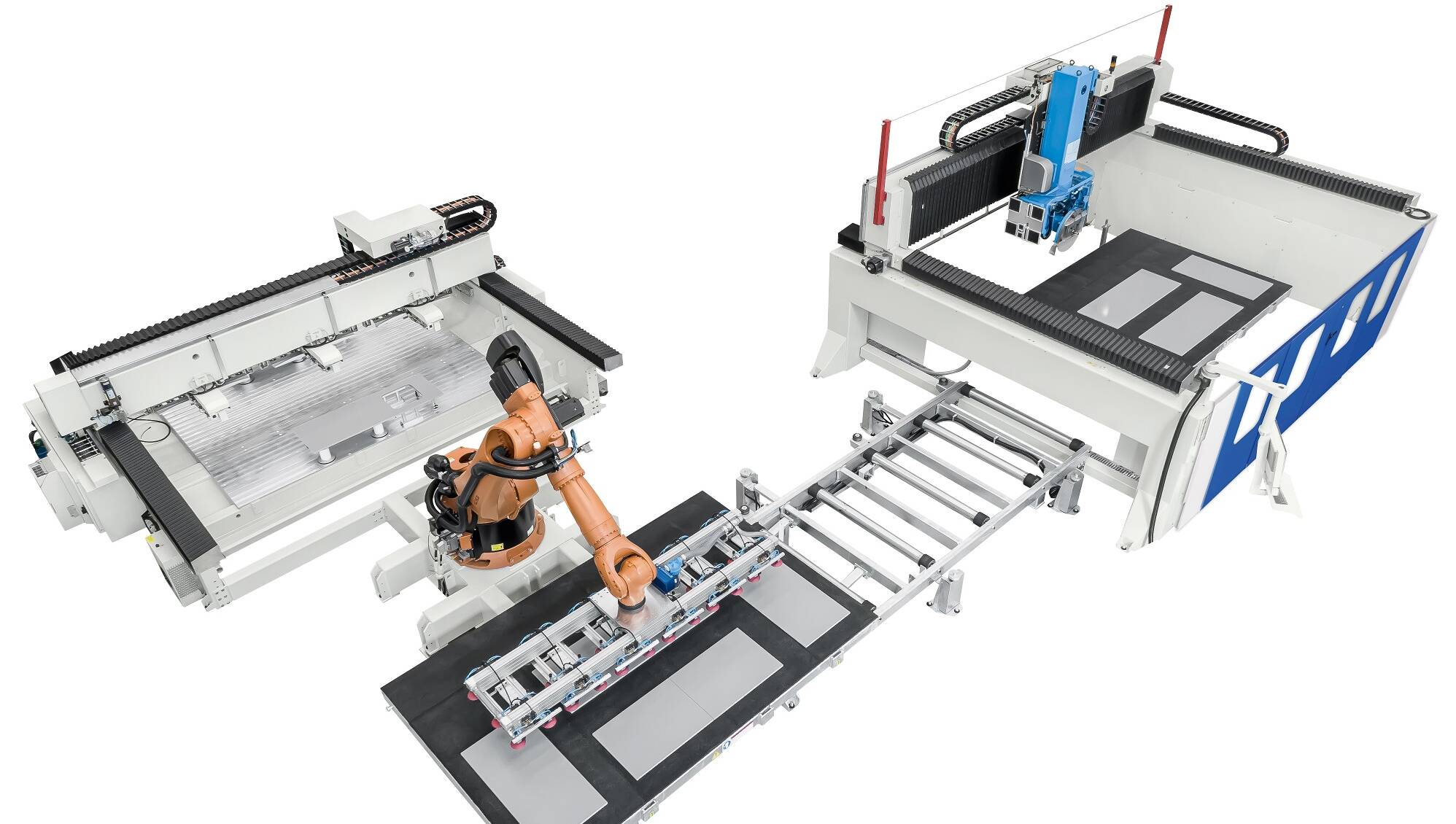
We have seen the impact these drastic changes make first-hand. Automated and semi-automated models like those from Bovone and CMS are strengthening factories across the stone, glass, and advanced materials sectors all over Australia.
Our goal is to find the right match for your operations and facilitate the path to secure an ideal workflow. Our experts listen to your goals, identify hurdles and find efficient ways to overcome them.
If you would like a one-on-one analysis of your operation, examining overtime costs, machine options, and overall opportunities for optimisation, book a meeting with one of our reps today.

This article is general information based on our experience working with Australian manufacturers. It isn’t financial advice, so speak with your accountant or finance broker before making an investment decision.
Frequently Asked Questions
When does paying overtime stop making sense?
Occasional overtime to cover unexpected jobs usually means your capacity is about right. When overtime is paid consistently over years, it is a sign that something needs to change, whether that is workflow, capacity or both.
What is the difference between OLE and OEE?
Overall Equipment Effectiveness (OEE) measures how well a machine is being used, based on availability, performance and quality. Overall Labour Effectiveness (OLE) applies the same three measures to your workforce. Looking at both shows whether the constraint is your people, your machines or the way work flows between them.
How do lenders work out how much I can borrow for new machinery?
Where profit and loss sheets aren’t feasible, many equipment lenders look at overtime expenditure over a period of years to gauge how quickly the debt will be paid off. Larger borrowing amounts generally require a deposit or profit and loss sheets.
How long does a new machine take to pay for itself?
It depends on what you are paying in overtime and what the machine costs. In the example above, a factory paying $300,000 a year in overtime made a $900,000 investment with a payback period of around three years.
Should I optimise my workflow before buying a second machine?
Yes. A workflow analysis often reveals small inefficiencies, such as the location of workstations and tool stations, that can be fixed without capital spend. If demand has still outgrown capacity after that, a new machine is the next step.
Are there grants or tax measures that help with machinery investment?
Depending on your state and the size of your business, there may be. Start with our Australian manufacturing grants guide, check the ATO’s current depreciation rules for small business, and speak with your accountant before committing.
Related Articles
 https://www.innovync.com.au/wp-content/uploads/2026/10/glasstec-2026-cms-stand.jpg
1500
2000
Nicole Sherwin
https://www.innovync.com.au/wp-content/uploads/2022/07/Innovync-logo.png
Nicole Sherwin2026-10-27 09:18:542026-10-27 10:25:38Glasstec 2026 Wrap: Three Things We’re Bringing Home
 https://www.innovync.com.au/wp-content/uploads/2026/10/glasstec-2026-preview-innovync.jpg
400
1200
Nicole Sherwin
https://www.innovync.com.au/wp-content/uploads/2022/07/Innovync-logo.png
Nicole Sherwin2026-10-12 09:22:112026-10-12 09:22:12Glasstec 2026: What We’re Going to Düsseldorf to See
 https://www.innovync.com.au/wp-content/uploads/2026/06/Website-Headers.png
600
1920
Nicole Sherwin
https://www.innovync.com.au/wp-content/uploads/2022/07/Innovync-logo.png
Nicole Sherwin2026-06-18 14:07:482026-09-17 12:26:30Australian Manufacturing Grants Guide: Spotlight on the $79.1M Transforming Queensland Program
 https://www.innovync.com.au/wp-content/uploads/2026/06/9bca65cb-351a-47ca-b32f-6eda021c189b-scaled.jpeg
1708
2560
Nicole Sherwin
https://www.innovync.com.au/wp-content/uploads/2022/07/Innovync-logo.png
Nicole Sherwin2026-06-18 13:31:492026-09-17 12:24:08Service: the biggest competitive factor in manufacturing
 https://www.innovync.com.au/wp-content/uploads/2026/09/robot-arm-grippers-for-industry-in-factory.jpg
788
1400
Nicole Sherwin
https://www.innovync.com.au/wp-content/uploads/2022/07/Innovync-logo.png
Nicole Sherwin2026-04-29 13:49:072026-09-17 12:24:09Manufacturing Robots: The Good, The Bad, and The In-Between
 https://www.innovync.com.au/wp-content/uploads/2026/04/byd-assembly-line.jpg
1080
1920
Nicole Sherwin
https://www.innovync.com.au/wp-content/uploads/2022/07/Innovync-logo.png
Nicole Sherwin2026-04-29 13:31:062026-09-17 12:24:09The Rise of Dark Factories
 https://www.innovync.com.au/wp-content/uploads/2024/05/pexels-kateryna-babaieva-1423213-2760241-scaled.jpg
3475
5212
Nicole Sherwin
https://www.innovync.com.au/wp-content/uploads/2022/07/Innovync-logo.png
Nicole Sherwin2026-03-02 12:11:292026-09-17 12:24:09Transforming Queensland Manufacturing Grants: Up to $1.5M Available for Advanced Manufacturing Investment
 https://www.innovync.com.au/wp-content/uploads/2026/02/curved-stonework.jpg
920
736
Nicole Sherwin
https://www.innovync.com.au/wp-content/uploads/2022/07/Innovync-logo.png
Nicole Sherwin2026-02-23 16:49:352026-09-17 12:24:102026 Stone Industry Forecast
 https://www.innovync.com.au/wp-content/uploads/2025/07/systron-Processing-of-Thick-Jumbo-Glass_4.jpg
1050
1500
Nicole Sherwin
https://www.innovync.com.au/wp-content/uploads/2022/07/Innovync-logo.png
Nicole Sherwin2026-02-23 16:41:192026-09-17 12:24:102026 Glass Industry Forecast
Get in touch
Looking for the right product for you, reach to our experts and let’s chat.

